Get In Touch With Us!
Phone
+91 7078038081
kp@krsnaye.com

Get instant quotes on custom Carbon Fiber parts for prototypes, small batch, and mass production with the lowest cost.
Fast delivery time: 2-5 working days. ISO9001:2015 Certified
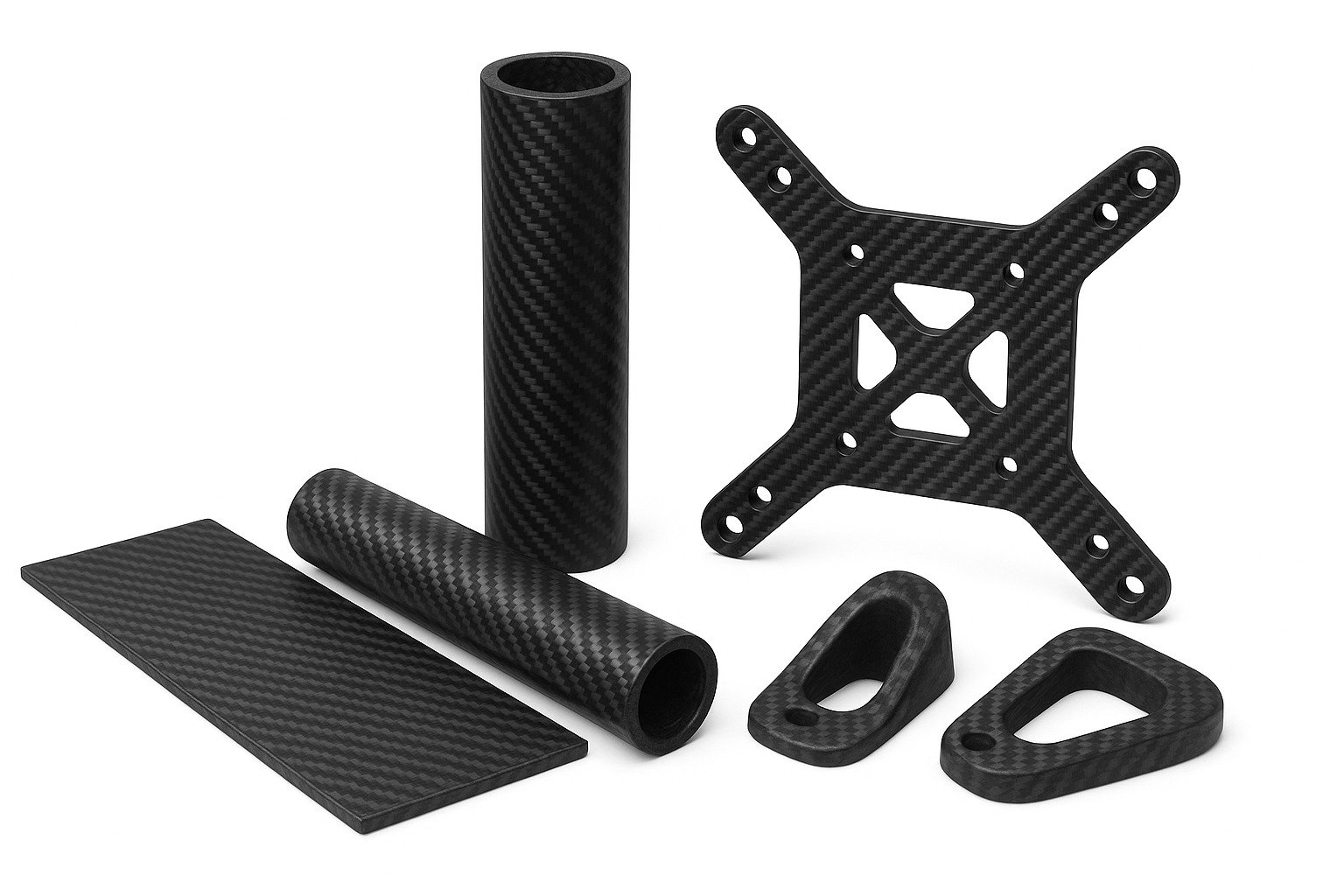
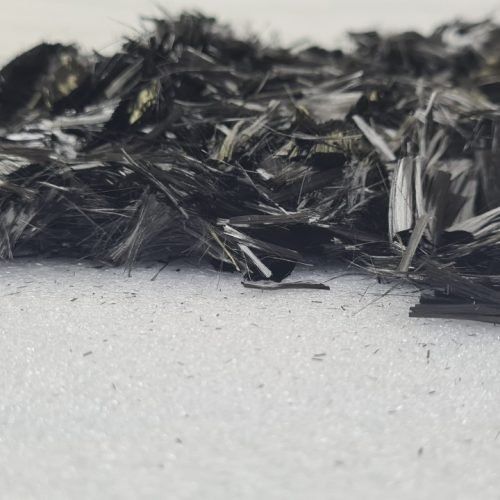
Carbon fiber is a strong, lightweight material made from very thin strands of carbon atoms that are tightly bonded together in a crystal structure. These fibers are typically 5–10 micrometers in diameter and are known for their exceptional strength-to-weight ratio, rigidity, and resistance to temperature and chemicals.
Carbon fiber is made up of >90% carbon atoms (sometimes up to 99%). It’s usually produced from a precursor material such as:
1. Spinning: Precursor material is spun into fibers.
2. Stabilization: Fibers are heated in air to make them thermally stable.
3. Carbonization: Heated in an inert gas (like nitrogen) at 1000–3000°C — this drives off non-carbon atoms.
4. Surface Treatment: Makes fibers easier to bond with resins.
5. Sizing: A protective coating is applied to prevent damage and aid processing.
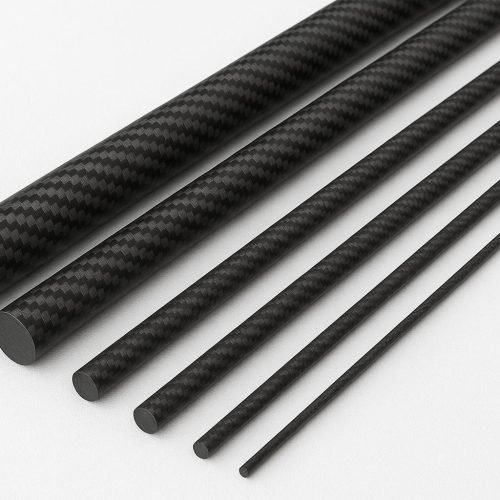
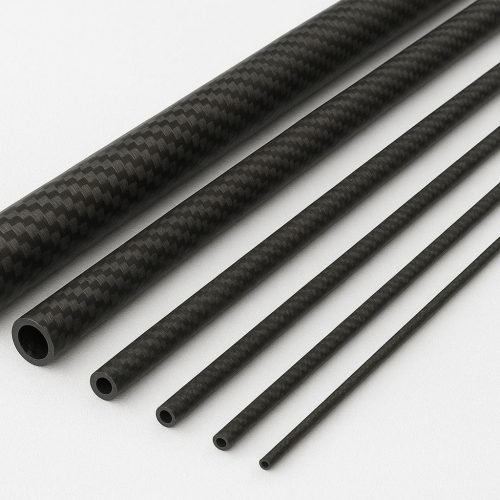
Two main types of carbon fibre tubes are commercially available:
Type | Characteristics | Manufacturing Process | Typical Diameter Range | Key Strengths & Weaknesses |
Pultruded | Smooth inner and outer surfaces; fibres run longitudinally down the length | Carbon fibre tow pulled through resin bath then heated die to form tube; fibres aligned unidirectionally | 0.7 mm to ~12 mm diameter (small sizes favored) | Very stiff longitudinally but prone to splitting and crushing; less torsional strength |
Roll Wrapped | Outer surface often has woven cloth finish (twill weave or plain with ridges); multiple fibre orientations | Several plies of prepreg carbon fibre wrapped around mandrel, shrink-taped, and oven-cured | Starts ~6 mm up to 60 mm and beyond | More robust under hoop and torsional loads; better resistance to splitting and crushing |
Additional less common methods include pull winding (adds helical fibres for torsion and hoop strength), filament winding (for high hoop strength, e.g., pressure vessels), and moulded tubes (for complex shapes).
Pultruded tubes excel in applications requiring:
Typical uses include arrow shafts, UAV push-pull rods, tent poles, robotic arms, kite frames, and embedded reinforcement in foam or wood (e.g. guitar necks).
Pultruded tubes are flexible in smaller sizes, with minimum bend radii increasing with diameter.
Roll wrapped tubes are preferred for:
Common uses include bicycle seat posts, camera tripods, drone arms, ultra-light aircraft components, and structural spars.
kp@krsnaye.com
Carbon fiber has a density of around 1.7–1.8 g/cm³, tensile strength ranging from 1200 to 7000 MPa, elastic modulus between 200 and 400 GPa, very low thermal expansion, and excellent performance at elevated temperatures.
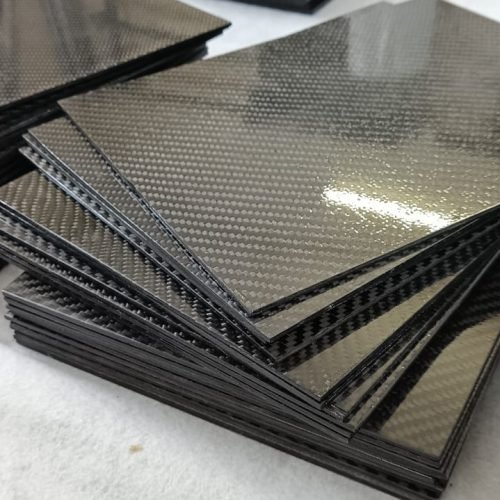
Commercially available standard products include carbon fiber tubes, rods, and sheets. These are offered in predefined sizes and thicknesses, with custom options also available.
Carbon fiber has a density of around 1.7–1.8 g/cm³, tensile strength ranging from 1200 to 7000 MPa, elastic modulus between 200 and 400 GPa, very low thermal expansion, and excellent performance at elevated temperatures.
Pultruded tubes are ideal for small-diameter applications with high axial loads and low torsion, such as UAV components, arrow shafts, tent poles, robotic arms, kite frames, and internal reinforcements.
Roll-wrapped tubes are used in applications requiring higher durability and torsional strength, including bicycle seat posts, camera tripods, drone arms, aircraft components, and structural spars.
Standard carbon fiber tubes are available in multiple OD and ID combinations with a typical length of 1000 mm. Carbon fiber sheets are available in thicknesses of 0.5 mm, 0.75 mm, 1 mm, 2 mm, 3 mm, 4 mm, and 5 mm. Custom sizes and shapes can be supplied on request.