
CNC Milling Services
From One Prototype to Full-Scale Production
Prototype, small batch, or mass manufacturing — our advanced machining and in-house finishing handle it all, start to finish.
Get instant pricing for custom metal and plastic machined parts, from prototypes to small batches and full-scale production, at competitive costs.
- Quotes for up to 1,000 parts, delivery in as fast as 5 working days
- 50+ materials
- 30+ surface finishes, tight tolerances up to ±0.001 mm
- ISO 9001:2015 and ISO 45001:2015 certified
- Free worldwide sample shipping.
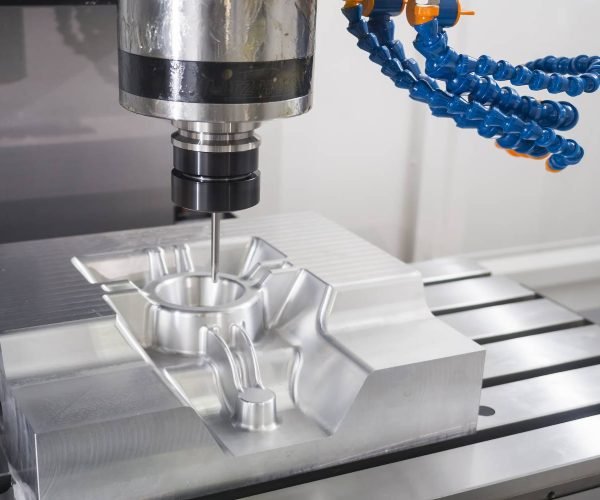
Krsnaye is a professional CNC milling parts manufacturer with over 25 years of hands-on machining experience. Our facility is equipped with advanced CNC machines, including five-axis CNC milling machines, three-axis milling machines, and compound turning-milling lathes. This setup allows us to handle everything from rapid prototypes to small batches and full-scale production, all with tight tolerances and competitive pricing. With delivery timelines as fast as five working days, Krsnaye is built for reliability, consistency, and long-term manufacturing partnerships.
CNC Milling Service in India
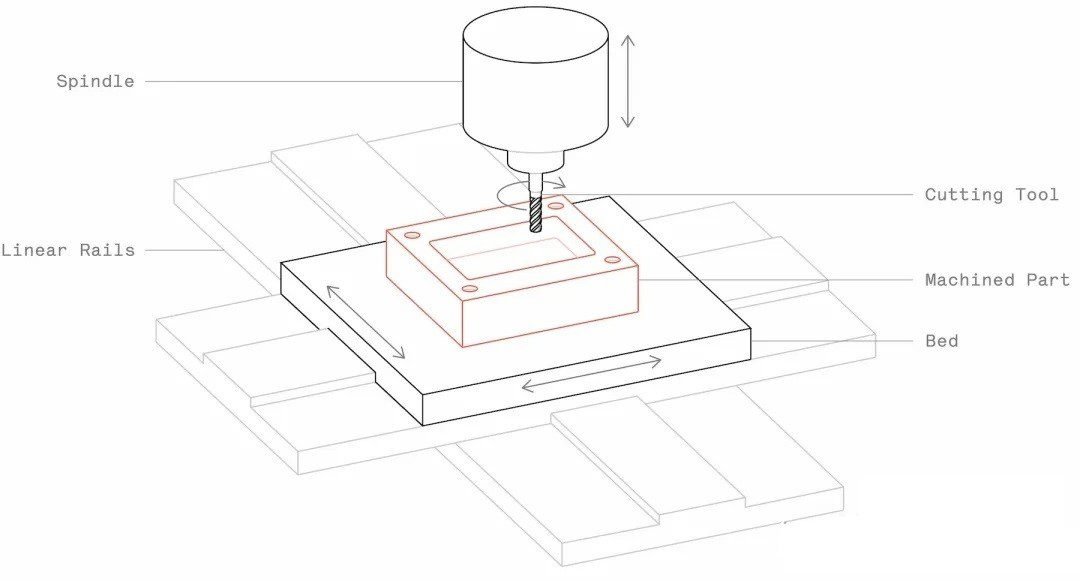
CNC milling is a machining process where a cutting tool mounted on a rotating spindle removes material from a solid block with high precision. The workpiece is firmly fixed on a table that moves or rotates along multiple axes, allowing the tool to cut from different directions. Advanced CNC milling machines can operate on five or more independent axes, making it possible to produce complex geometries accurately without shifting the part to another machine.
How CNC Milling Work?
A CNC milling machine operates in much the same way as a CNC machining center, except it usually does not include an automatic tool changer or tool magazine. Apart from this difference, it can perform many of the same operations, such as drilling, reaming, countersinking, boring, and tapping. Its primary role, however, is milling the workpiece to precise dimensions.
The machine is controlled by G-code generated through CAM software. This G-code defines the exact Cartesian coordinates the cutting tool must follow and controls key parameters like feed rate, spindle speed, tool movement, coolant flow, and other machining functions. Together, these instructions allow the CNC mill to produce accurate and repeatable parts with consistent quality.
Parts That Can Be Manufactured with CNC Milling Machines
Surface Milling
Surface milling, also known as plain milling, involves machining surfaces that are parallel or perpendicular to the horizontal plane. The majority of components produced on CNC milling machines fall under this category. These parts can typically be machined using simple two-axis interpolation on a standard three-axis CNC milling machine.
Angle Milling
Angle milling refers to machining surfaces that are inclined relative to the horizontal plane and whose angle changes continuously. Since these surfaces cannot be unfolded into a flat plane, angle milling is best carried out using three-axis, four-axis, or five-axis CNC milling machines for better accuracy and surface consistency.
Form Milling
Form milling, also called curved surface milling, is used to machine irregular or contoured surfaces. These surfaces cannot be developed into a flat shape, and the contact between the milling cutter and the workpiece is usually at a single point. Such components are commonly machined using three-axis CNC milling machines, depending on the complexity of the geometry.
Metals and Alloys We Specialize In
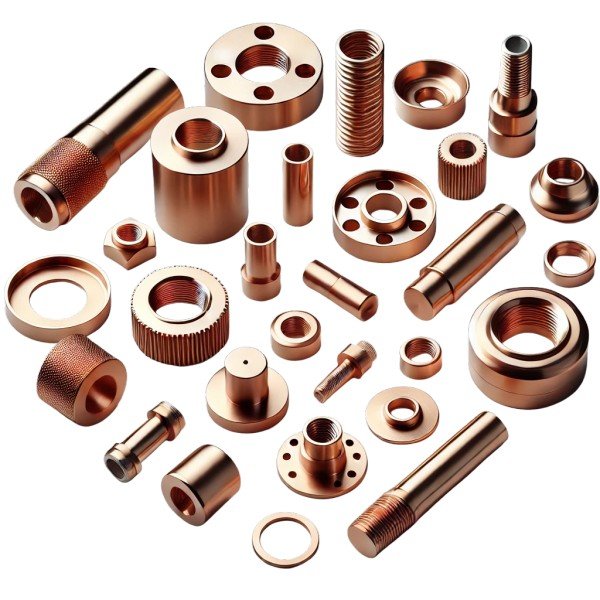
Copper
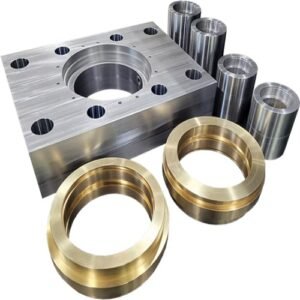
Carbon Steel & SS
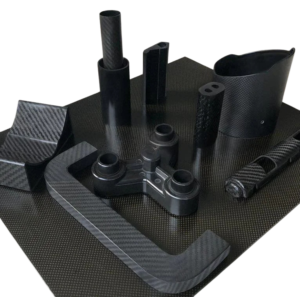
Carbon Fiber
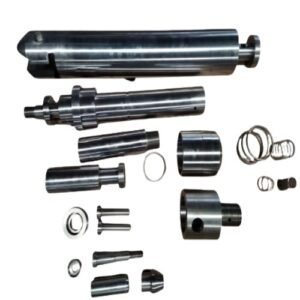
Aluminum
CNC Milling Applications
Structural components form the backbone of electronic products. They hold parts in place while providing support, protection, and overall structural integrity, along with contributing to the product’s appearance. Depending on where and how the product is used, these components may also offer electrical connectivity, shock resistance, heat dissipation, corrosion resistance, electromagnetic shielding, and anti-static protection.
Based on material selection, structural components are generally classified as metal or plastic parts. During the early stages of product development, CNC machining plays a critical role in producing both types. It allows metal and plastic structural parts to be manufactured quickly as functional or appearance prototypes, helping teams validate designs faster and accelerate the overall product development process.
CNC machining is essential in the production of aerospace components, bringing precision and consistency to highly demanding manufacturing processes. Aerospace parts are made from a wide range of hard metals and specialized materials, covering applications from non-structural elements to mission-critical components. CNC machining is especially effective for difficult-to-machine materials such as Inconel, a nickel-chromium alloy designed to perform reliably under extreme temperatures and stress.
Because of their size and mechanical complexity, agricultural components must be machined to strict technical standards. This includes tight tolerances, high dimensional accuracy, and the use of durable materials to ensure long service life in demanding field conditions. Custom CNC machining plays a crucial role in agricultural equipment manufacturing, delivering consistent quality and reliable performance. Using precision-machined CNC agricultural parts not only improves equipment durability but also strengthens competitiveness in the market.
The flexibility, adjustability, and high machining precision of CNC lathes have long been recognized by the automotive industry. As early as the 1960s, automobile manufacturers began adopting CNC lathe machining for the production of automotive components. By the 1990s, increasing market competition and the demand for greater product variety pushed manufacturers toward flexible, multi-variant production. To meet these evolving requirements, CNC machine tools became the core of flexible manufacturing systems and were widely used across automotive component production lines.
Modern CNC machines evolved from early manual machine tools developed over 200 years ago, originally used to produce uniform weapon components for the military in large batches. This foundation of precision manufacturing continues today, with the defense industry relying heavily on CNC machining and turning for both prototype development and mass production. Over time, many of these machining techniques and components have transitioned into civilian use, with innovations first developed for military applications now widely applied across aerospace, electronics, medical, and other high-precision industries.